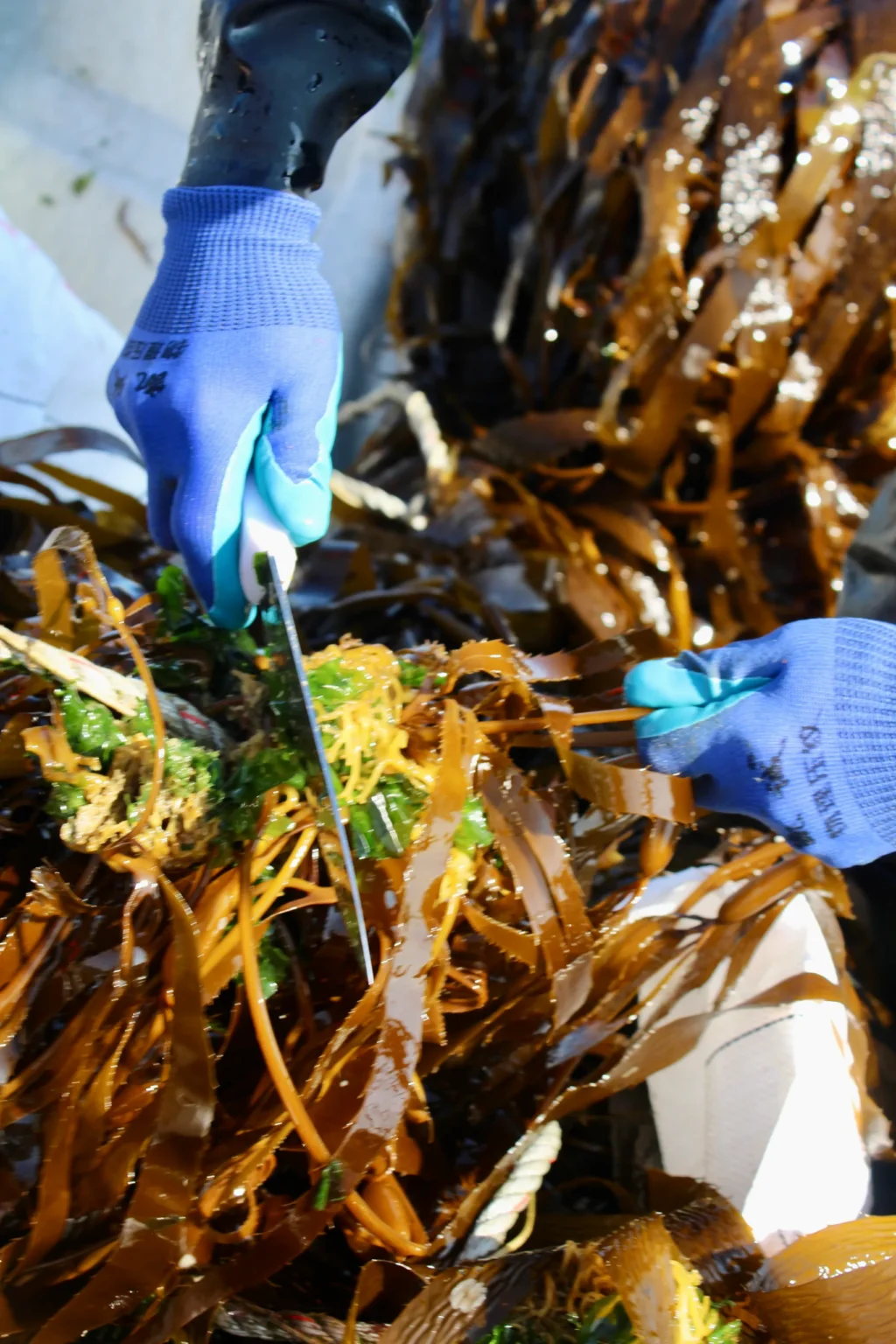
01 Core business
Direct B2B sales
Wet biomass, paste and powder for aquaculture, biostimulants, biomaterials and cosmetics. It is our core business and the line that scales with production.
Explore our productsImpact Model
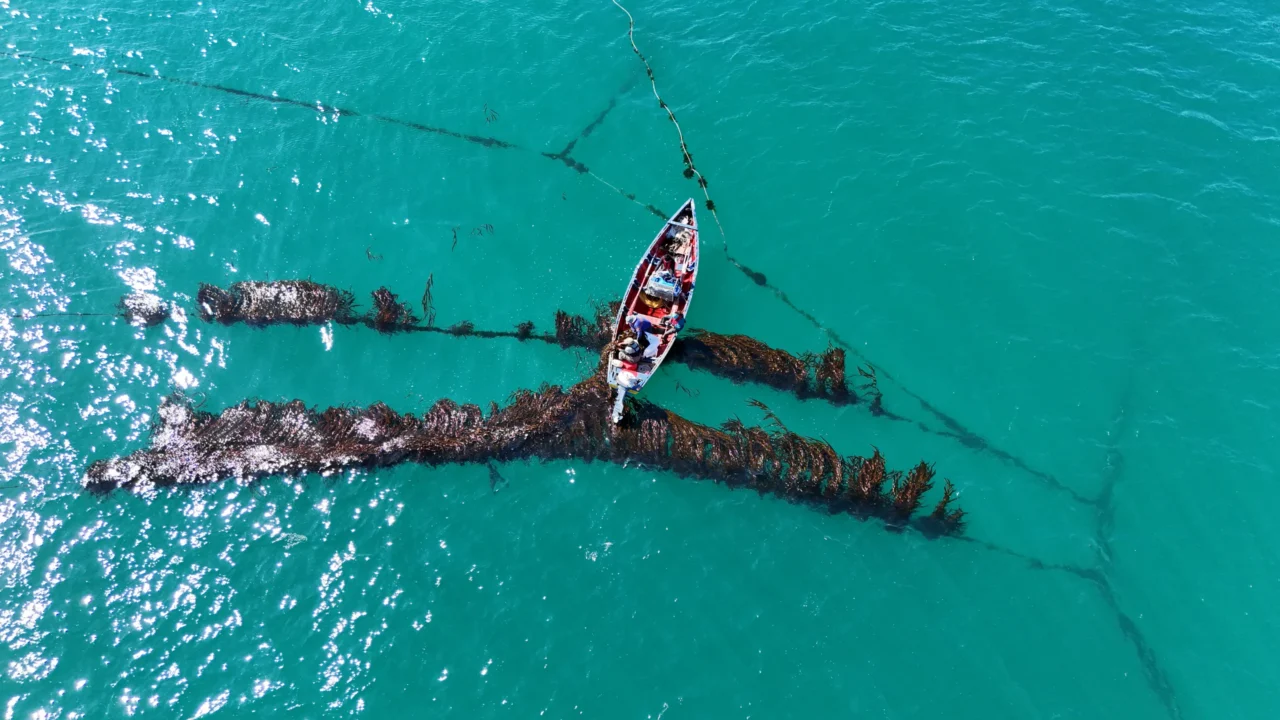
What we’ve measured since we started, across all our projects.
26,600 kg
3,570 kg
15 ha
120
60
+6
The opportunity
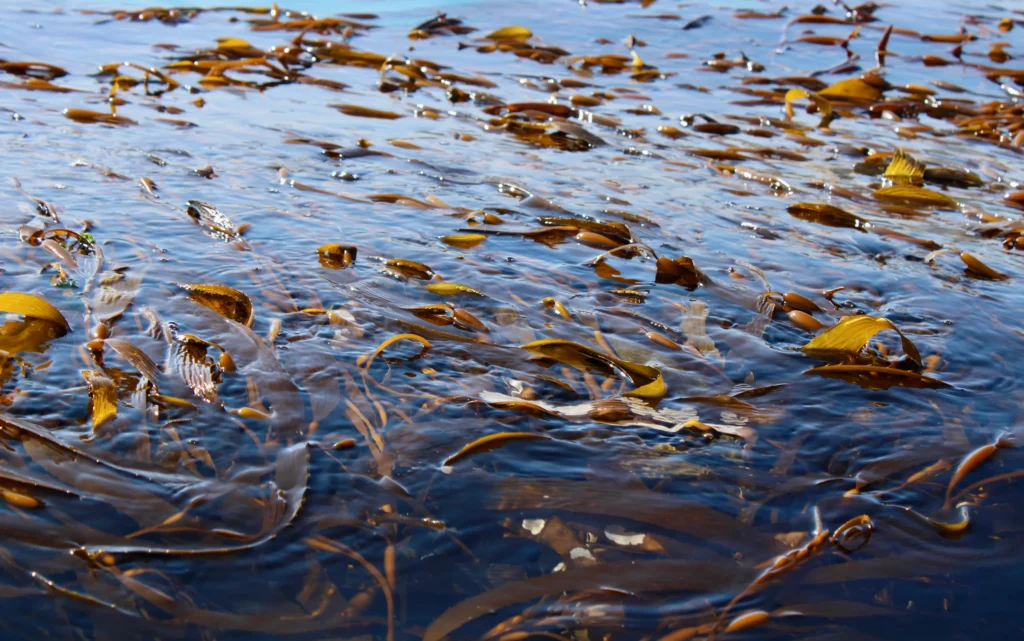
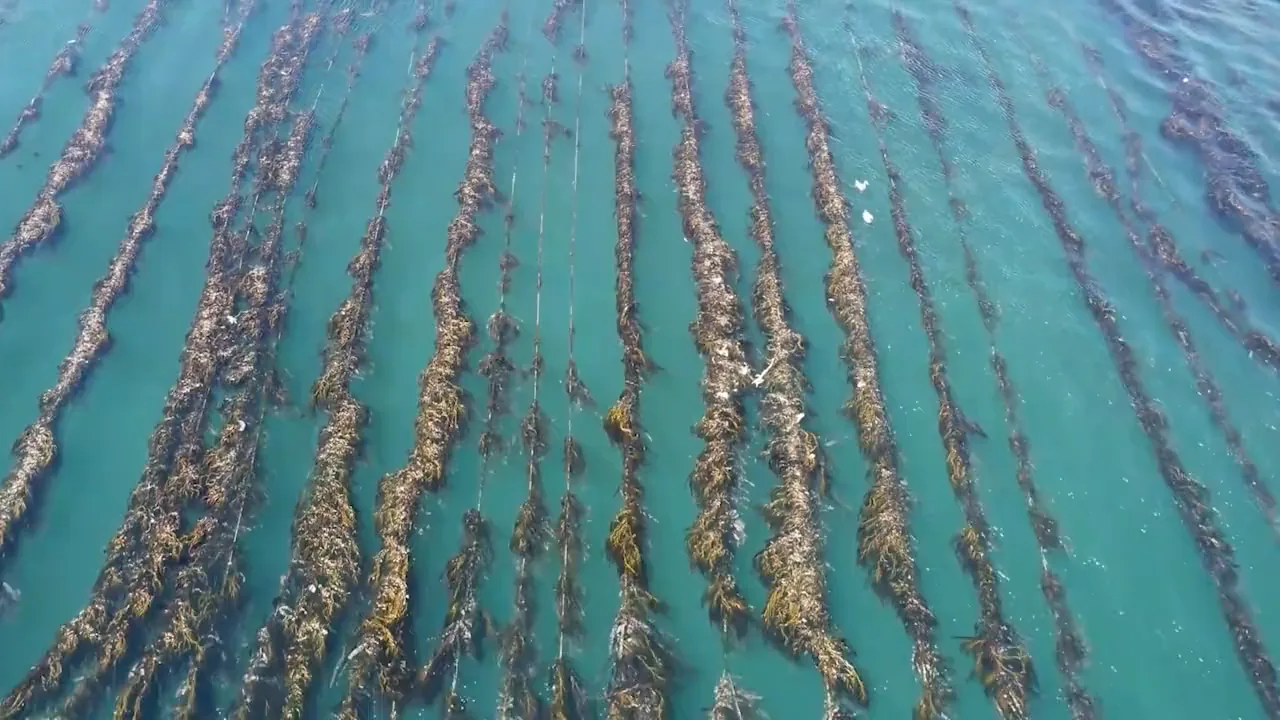
At Huiro Regenerativo we farm Macrocystis pyrifera — the brown seaweed with the greatest potential in the South Pacific and a species native to the Chilean coast — through our own standardizable, traceable production chain. We replace extractive harvesting with regenerative farming: biomass of consistent quality, continuous supply, and ecosystems that recover instead of degrading.
The coast of the Los Lagos Region, shaped by the Humboldt Current, provides cold, nutrient-rich waters: the natural conditions Macrocystis pyrifera needs to grow. We farm a native species in its optimal habitat: fast growth, high-quality biomass and no synthetic inputs. It’s an origin advantage that is hard to replicate outside these waters.
We control every stage, from genetic material to finished product. That vertical integration, built on our own technology, is what allows us to guarantee end-to-end traceability and standardization, something extraction from natural beds cannot offer.
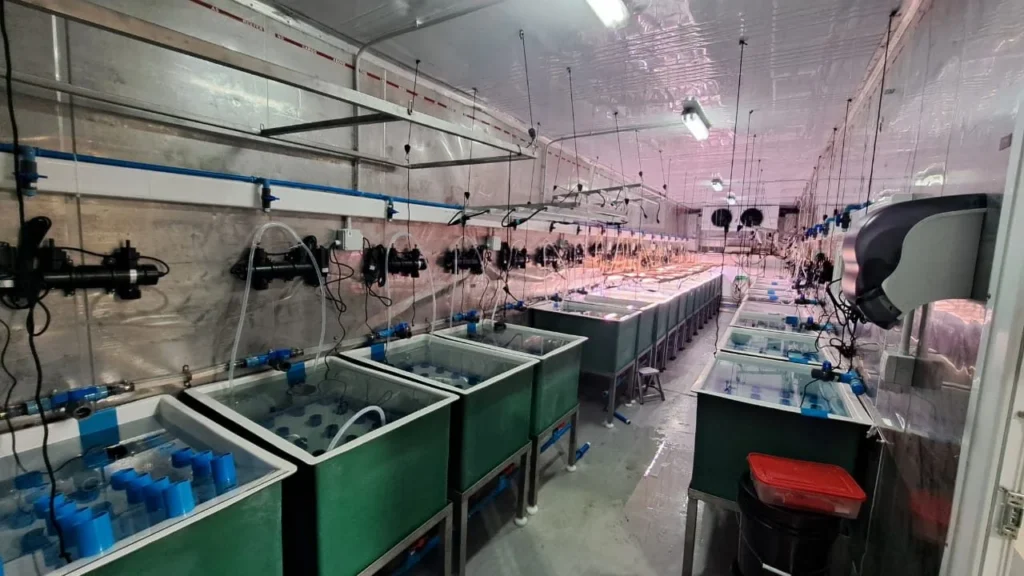
We produce strains from selected genetic material, using our own scaled-up hatchery process.
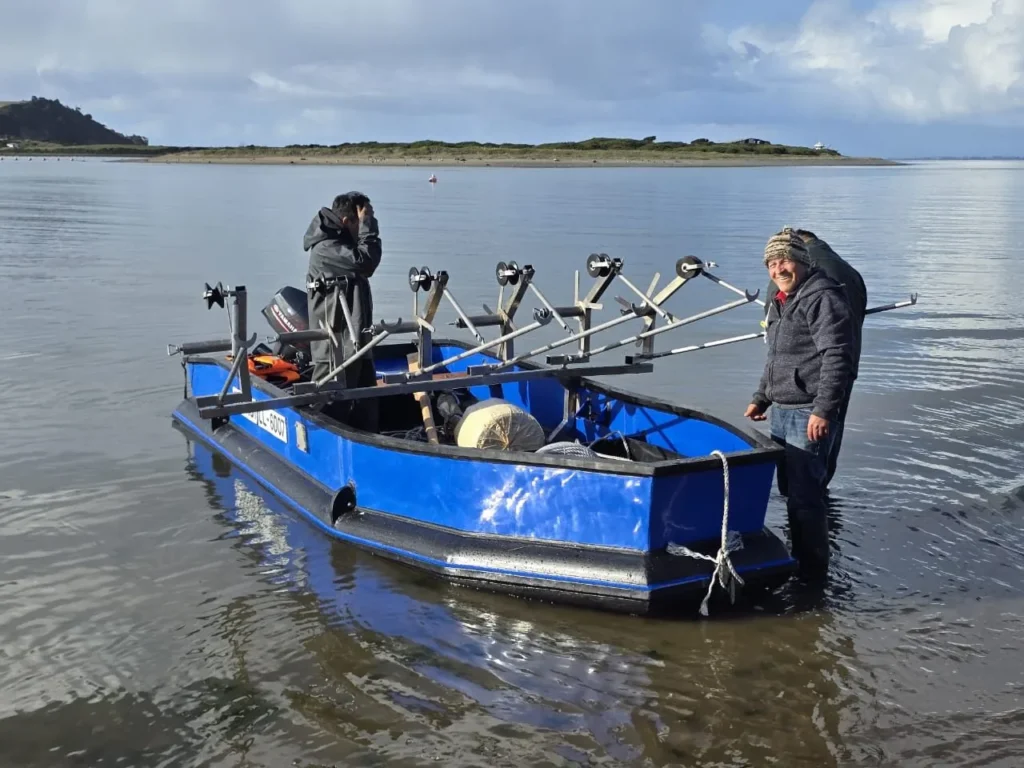
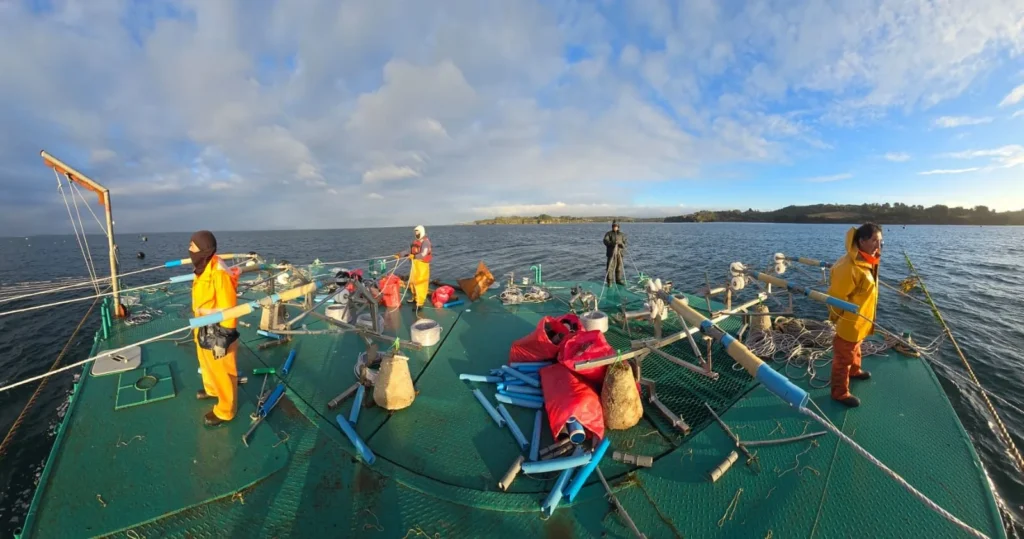
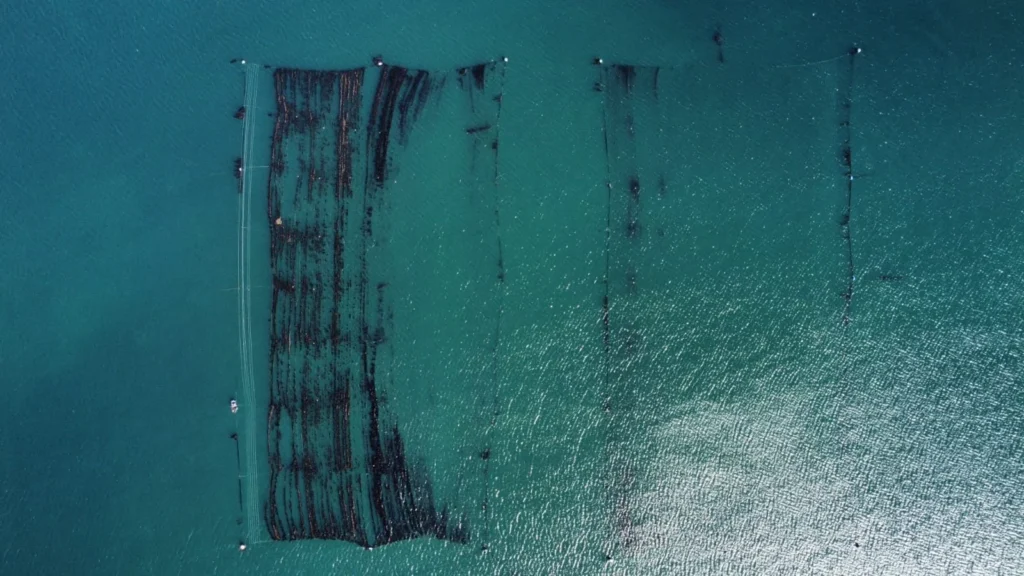
We seed long-line systems within our concessions, using automated seeding and harvesting machinery developed in-house.
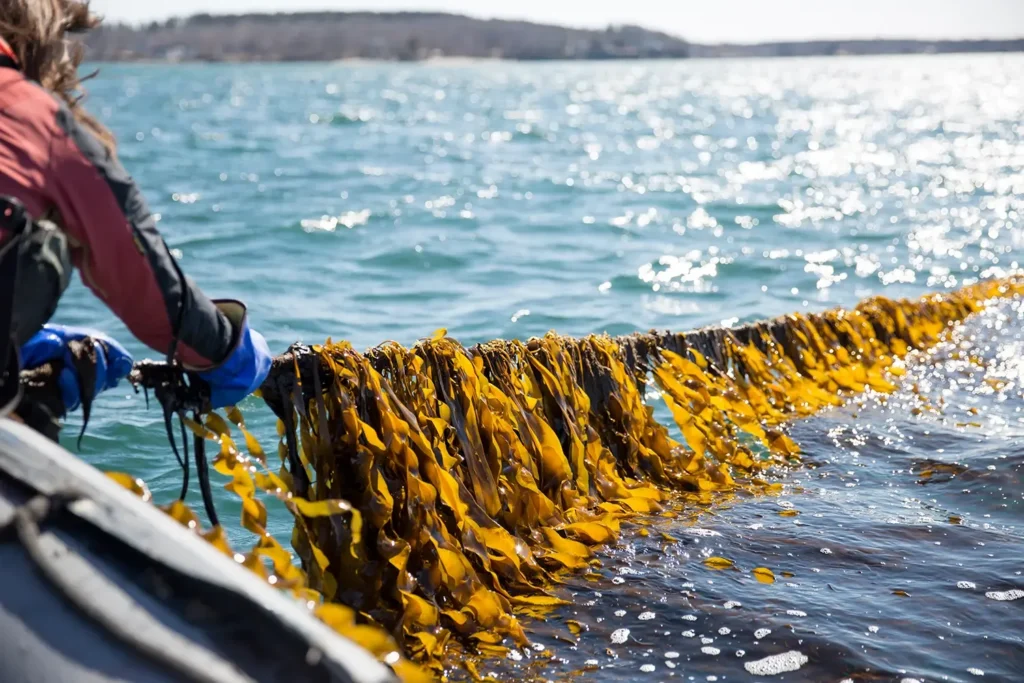
IoT + SaaS platform for real-time oceanographic monitoring, with a predictive model for biomass and environmental variables.
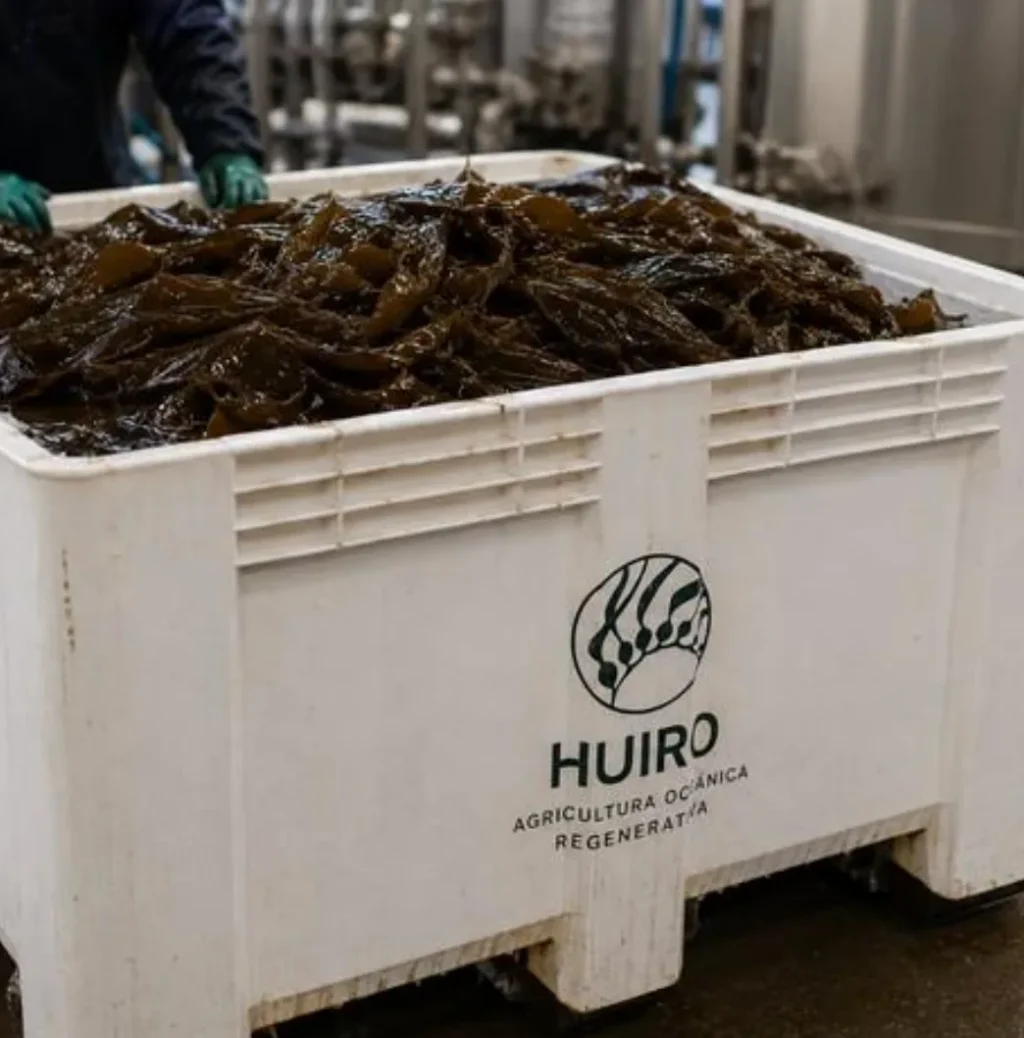
Progressive value addition: wet biomass, kelp paste and kelp powder.
01 Core business
Wet biomass, paste and powder for aquaculture, biostimulants, biomaterials and cosmetics. It is our core business and the line that scales with production.
Explore our products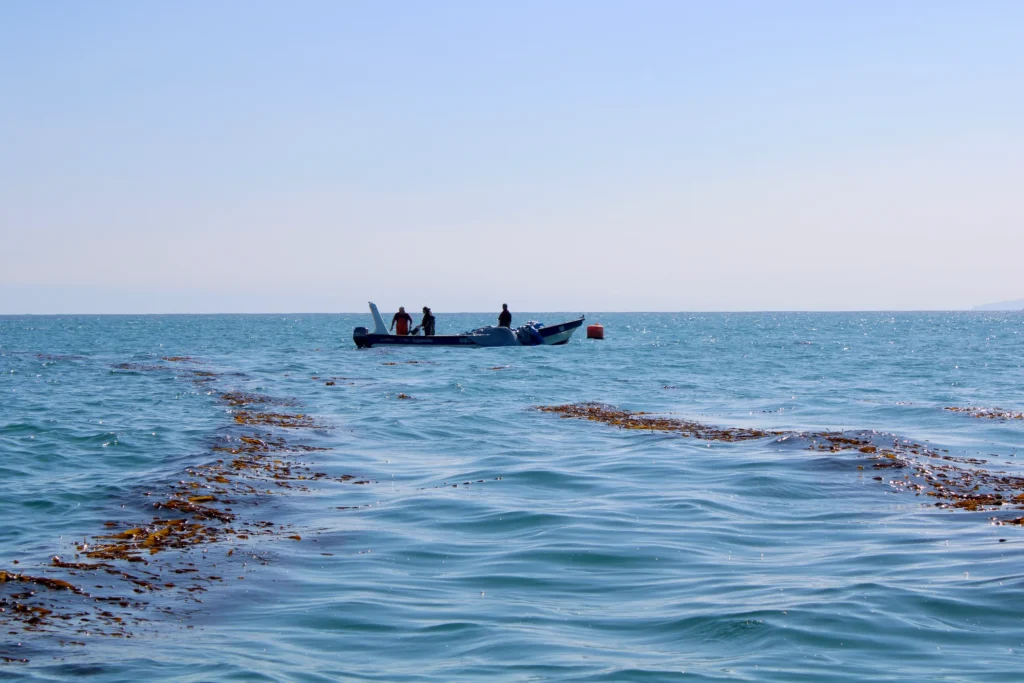
02 Early revenue
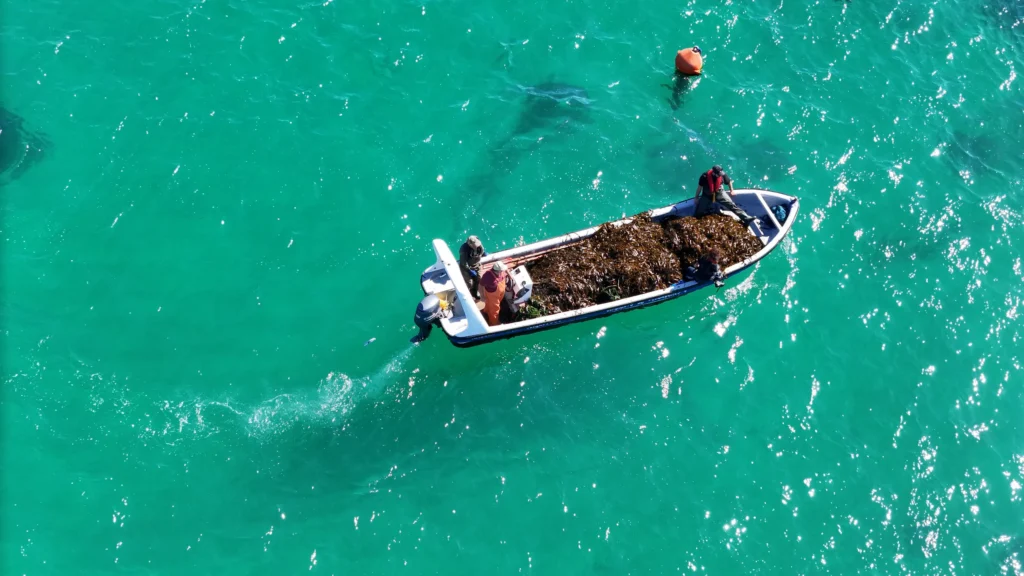
As a way to generate early revenue and validate our farming technology, in 2023 we launched regenerative ecosystem services for the aquaculture industry. The model allows us to operate in fallow concessions, keeping the asset legally active through productive activity. At the same time, seaweed acts as a biological filter that removes excess nutrients, mitigating the environmental impact of salmon farming on the marine ecosystem.
Triple impact
We don’t treat impact as a cost or as marketing. We design it into the business model: producer profitability is what makes conservation sustainable over time.
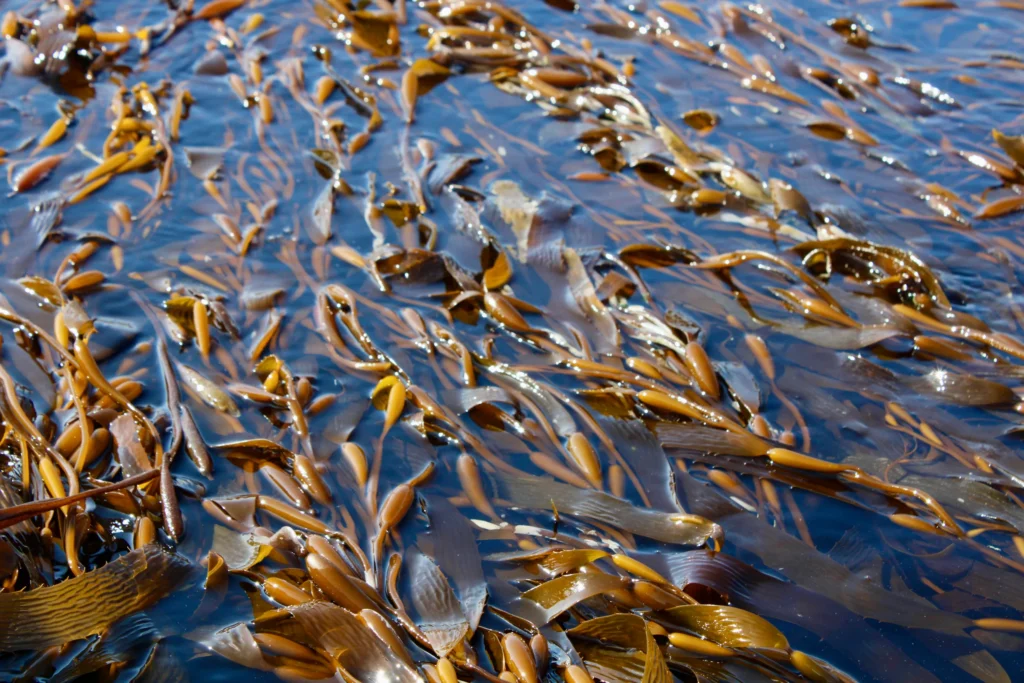
Every farm captures carbon and nitrogen and regenerates the marine environment where it is installed. Measurable restoration, not offsetting.

We bring coastal communities, including Huilliche communities, into formal value chains under Chile’s legal frameworks for coastal access (Lafkenche Law, ECMPO, AMERB).
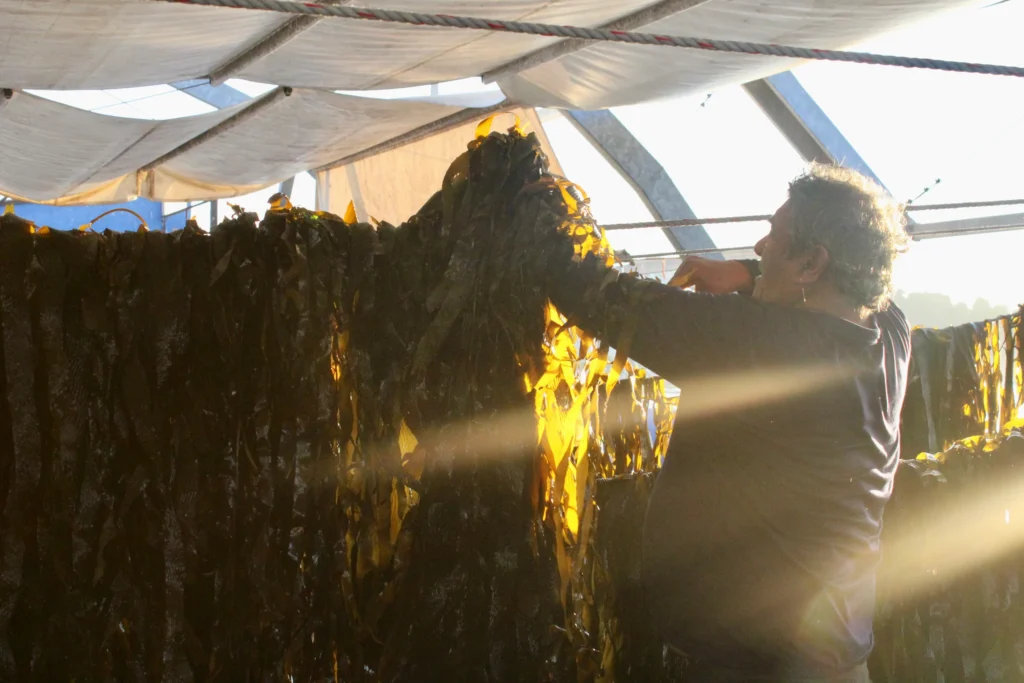
Standardizable, traceable biomass that opens up higher-value markets, with a model that grows profitably.
Roadmap
2026–2027
Production consolidation and market prospecting.
We scale from ~270 to ~830 tonnes per year, with stable M. pyrifera protocols and pilot by-products (kelp paste and powder) tested with end buyers.
Key milestone: operations reach positive EBITDA in 2027.
Annual production ~270 → ~830 t
2028–2030
Growth from ~1,500 to ~4,000 tonnes per year.
Scale-up of validated commercial lines and assessment of the biorefinery pathway.
Key milestone: free cash flow turns positive in 2028.
Annual production ~1,500 → ~4,000 t
2031–2035
The South Pacific’s benchmark for M. pyrifera.
Scaling from ~6,600 toward ~21,600 tonnes per year by 2035. Multipurpose biorefinery and differentiated strains.
Annual production ~6,600 → ~21,600 t
Our regenerative seaweed farming contributes to four SDGs, with a positive impact on the ocean, the climate and coastal communities.
Credentials
It’s an operation with institutional backing, technical partnerships and real commercial validation.
Meet the team ~USD 3M deployed in farming R&D.




Looking for strategic partners
We’re looking for partners who want to build South America’s first regenerative marine industry with us: buyers, technology co-developers and allies who share the vision of an ocean that is farmed rather than depleted.
Let’s talk